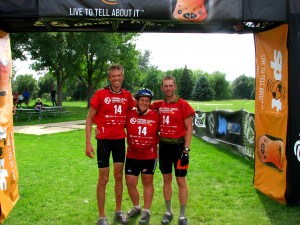
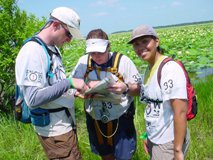
 Adventure Racing is my passion. The outdoors,
the teamwork, the adrenaline, and the competition draws me to
this extreme sport.
Adventure Racing is my passion. The outdoors,
the teamwork, the adrenaline, and the competition draws me to
this extreme sport.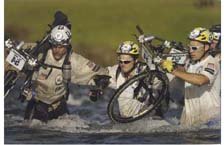 Adventure racing can include orienteering and
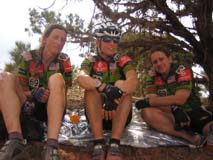 Adventure racing normally has teams of 4, but
nationals are teams of 3. To be in the ranking your team needs to
be co-ed.
Adventure racing normally has teams of 4, but
nationals are teams of 3. To be in the ranking your team needs to
be co-ed.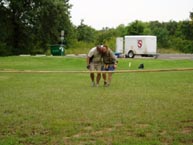
 24-Hour
 Expedition
 1995
1995 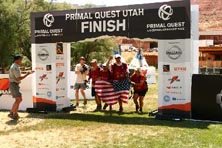
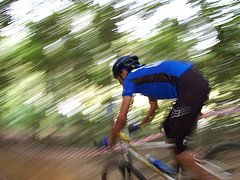 Training for adventure racing varies depending
on the length. We have several options when it comes to
training.
Training for adventure racing varies depending
on the length. We have several options when it comes to
training.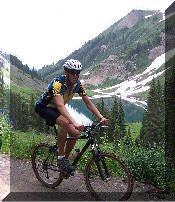
Home | About Me | Contact
Disclaimer | Build
Your Own Website | What's
New | Site Map

ADVENTURE RACING
I have spent as much as 30 hours per week training, depending on what race I have coming up. Like many, I first saw Eco-Challenge on television and thought I want to do that! Then I realized you do not sleep- except for a few hours per race. I decided, "no" to that. About a year later, I saw an ad for a Hi-Tech race. These are sprint races lasting around 2 hours. I talked my husband, his friend and my brother-in-law into racing. I will never forget the feeling as we sat eating pizza after the race. I was so ecstatic that I had completed a two hour race! It seems like so long ago, but now 2 hours is a short training run. I was thinking "long" would be 12 hours. She said it was 24 hours! I agreed to do it. Though it took us 33 hours and we were lost much of the time, it tops as one of my favorite races-the Berryman. Not too long after I met a man named Bill Lovelace. He was a pro-racer and an incredible athlete. He took me under his wing and mentored me. Today he is one of my dearest friend, though we could count the hours we were able to spend together.From there, I never looked back. I quizzed Bill every day and now you can see his tips as well. He has wonderful tips on mountain biking and you can also check out the random ar tips. My favorite races are expedition races that last for days. I can't figure it out myself, as while I am racing I frequently say, I'll never do this again. When I cross the finish line however, I am already ready to do another. My journey at Primal Quest Utah, my first expedition race was incredible. I was not even supposed to be there, yet now it is a highlight of my life. Ok I should update this, each expedition race became a pivotal time in my life. There are several teams in the sport who know that teamwork is what it takes to make it to the top. Without teamwork this sport wouldn't be what it is today. Primal Quest, taking over for Eco-Challenge, is now the Olympics of adventure racing. Adventure races are all over the world and expedition races can be found in many countries. The best races in the world challenge you physically and mentally, beyond anything you could imagine. WHAT IS ADVENTURE RACING?
An expedition event can span ten days or more while sprints can be completed in a matter of hours. There are dark periods during races– the choice when (and if) to rest or sleep is left to the competitors. This can be a big conflict between athletes and is one of the biggest strategy players. Team Nike (the number one team in the world at one time) likes to bank sleep early. Team Merell (a team that rivals Nike often) at Primal Quest Utah led much of the way on no sleep.
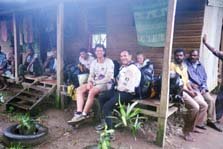
Typically the teams are 3 men and 1 woman, but at Primal Quest 2006, I raced with 3 women. We were the only 3 person women's team of the 90 teams. My teammates were stronger than many of the men with whom I've raced. This is not to take anything away from the men, these women were just that strong! Jenny went on to race with Nike. Elizabeth could have easily been the one whom they called, as she is just as strong. Primal Quest is the "Olympics" of adventure racing, now that Eco-challenge is gone. It is a race that is 400-600 miles long and lasts up to 10 days. Primal Quest has taken a hiatus, but the Patagonia Expedition races, is one that will test your like never before.ADVENTURE RACING LENGTH
A sprint is usually a two to six hour race. It is more like an off-road triathlon. It is very fast paced. It has minimal navigation and sometimes has team building games or special tests. 12-Hour A six to twelve hour race usually has more navigation and really starts to test your level of endurance. It will help you decide if you love or hate the sport. The winning teams will run all the trekking sections and bike very hard.
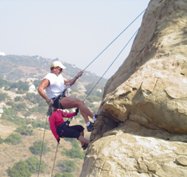
A race lasting between 24-48 hours has UTM-based navigation. Sometimes there is rope work. If they have ropes it is usually a rappel. Sometimes you will need a support crew for these races. This is a great test of your ability to go through the night. On my first 24 hour race, I was so afraid I would not be able to stay up all night. I had coffee beans and all kinds of snack foods ready to keep me awake. It ended up being pretty easy to stay awake. This is mostly because it was cold and we were lost in the Ozarks! Multi-day Races can last 36 hours to 48 hours. There is always advanced navigation and route choice. Sleep deprivation becomes a significant factor. Deciding when to sleep or if you will sleep is key.
Three to 11 day races involve all the challenges of a multi-day race, but often with more disciplines (e.g., horse-back riding, mountaineering, white water paddling and advanced rope work). Sleep, teamwork and sheer determination are a key to winning and just finishing these races. This becomes a scenario where just finishing makes you feel like a winner. I went from a 48 hour race to racing 6 days at Primal Quest. The level of training, demand on your body, and determination is incredible. It was the best and worst times physically of my life. Free Shipping at Moosejaw.com I love it and couldn't wait to go back and race Primal Quest Montana 2008! The Montana race was incredible with 100,000 foot of elevation gain. I have some great memories of Primal Quest Montana and made some great friends. One of the enjoyable things about expedition races is re-hashing and embellishing the stories. Reading the extreme race stories is a favorite past time of mine. One exciting thing for me was reading about all these people and then lining up beside them at the starting line of Primal Quest. HISTORYHistory has produced some awesome and thrilling races. To see what races are popular now and considered the best check out The Best Races. 1968 People debate the origin of adventure racing. The oldest race rumored is the two-day Karrimor International Mountain Marathon. The Karrimor Marathon consisted of two-person teams. Racers climbed the mountains while carrying their supplies. It was the same distance of two marathons. 1980 Alpine Ironman was the next race held in New Zealand. There was running, paddling and skiing. Robin Judkins,the Alpine Ironman's creator, created the Coast to Coast race the same year. This race used many of the same disciplines as today's races. trail running cycling paddling 1982 The Alaska Mountain Wilderness Classic was six days of unsupported wilderness racing. The course was 150 miles. 1989 Gerald Fusil's started the Raid Gauloises in New Zealand. The race included many of the same disclinplines of today's adventure racing. It had co-ed teams. They competed in a multi-day 400+ mile race. 1991 The first Southern Traverse was held in 1991.
He purchased the rights from Gerald Fusil. He then launched the first "Eco-Challenge" race. Thankfully Burnett brought the world adventure racing. He promoted his event by making heart felt reality television (the last taping was last held in 2002). Eco-Challenge first used the term "adventure race". Many people still hope this ground-breaking race will come back, including myself! It seems with the success of so many other shows, by Mark Burnett, Eco-Challenge will not be back. 2002 Primal Quest is now the Olympics of extreme racing. It is run by Don Mann and a fantastic staff that has taken adventure racing back to the grass roots. 2008-2009 Primal Quest is still the biggest race this year. Our team took on Primal Quest Montana. I thought Primal Quest was an epic race. I still enjoy watching Primal Quest Utah and Primal Quest San Juans I train each morning. We also completed Primal Quest Badlands and placed 17th.
TRAINING FOR ADVENTURE RACING
Check out our links below to see what training might help you. Bill Lovelace my mentor and friend helped me become an expedition adventure racer. There are tips here from Bill, as well as much researched and tried and trued race training. I began studying this with a passion when I first started racing and have looked at it from science all the way to the heart. Kim's Workouts and Extreme Fitness ADVENTURE RACING GEAR
I love trying to get ultra-light gear, or cutting things off my gear to make it ultra-light. I have a personal gear list which is for basic races and then a mandatory gear list for each race. For instance Primal Quest will have an extensive gear list on their site in addition to what we normally bring. From helmets, to ascenders, to shoes- gear is a lot of fun and for many a personal preference. I used to look at what the professionals were wearing. That does not work. My feet are wide and therefore I cannot wear Salomon Shoes as a lot of people wear. I actually used to wear them, but my feet have gotten wider! I now wear Merrells.
I also search out the very best gear I can find; then I shop around for that exact product. I look for great gear deals and then pass on the stores to other racers. People laugh, but when you are carrying 16 different items and you have saved one extra ounce per item, you are carrying one pound less...a significant difference. For the latest gear picks that I have tried and more specifics about gear click here. HISTORY OF ADVENTURE RACING VIDEOSThis is a video about how adventure racing started, showing some great race moments. It gives you a great taste of adventure racing and may take some of you back to the "Eco-Challenge" days.
|
Sign up for our Extreme Adventure FREE Sports-ZineExtreme Adventure Sports Zine
|
|
Adventure Racing: Adventure Races | Gear |Kayaking |Mountain Biking|Navigation|
Team Work |Trekking|
White Water Kayak
 |
Subscribe To This Site


The link to your selling page can go here
Powered by Site
Build It! |
Copyright©2008 www.extreme-adventure-sports.com