 What you eat on the days when you are working out heavily is a key to performance and recovery. Your meal directly after the workout, affects the next workout, by replacing glycogen in the muscles.
 On recovery days, when you are not burning as many calories, your diet should vary a little bit. This is especially true during seasons of high training.
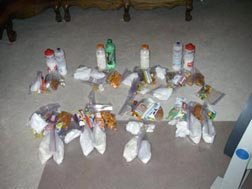 Since athletes may be very hungry even on "off" days, try to eat foods that fill you up. I love to have soup in the winter and salad in the summer. This can help give you a lot of volume of food and therefore be more satisfied. Whole-grains are also very filling.
 Junk food detracts from the athlete diet menu. It can get very tempting to eat junk food, especially if you are on a healthy athlete diet menu.
 If you are planning on training for extreme events, you have to be committed to modifying the outside of your body and the inside with healthy foods. Keep junk foods and fatty foods to a minimum.
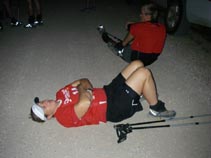 Most athletes know that
 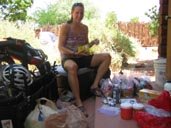 Where do sports bars come in, on the athlete diet menu?Sometimes it is too hard to pack fresh food. This is where a sports bar can help in the sports nutrition diet.
Home | About Me | Contact
Disclaimer | Build
Your Own Website | What's
New | Site Map

|
Home :Sports Diet: Athlete Diet Menu
ATHLETE DIET MENU
I used to try to drop some weight during heavy training by lowering my carbohydrates. Though I could usually do my short workouts, when it came time to do the long run or bike, I would bonk. I had no energy, because I wasn't taking in the right fuel. WHAT TO EAT ON NON-WORKOUT DAYS Athlete Diet Menu
Workout days burn up a lot of energy, so the diet for those days should help to replace that energy. On non-workout days, a fair amount of carbohydrates, protein, and fat should still be ingested within reason, but less helpings of it. So you should keep the above ratios and just reduce the amount of calories you need. Why is this? If you aren't burning up as much energy that day, your body doesn't need as much food to replace that energy lost. Basically you can get fat!
Make sure to eat several servings of fruit and greens. This is great for any healthy system and has antioxidants. This will help you ward off sickness. This is my weakness, so I have to be very careful with my athlete diet menu and include veggies and lots of supplements. A great way to aid recovery is to consider a raw foods diet. It is an excellent source for an athlete diet menu. It can help with your uptake of minerals, nutrients and increase your energy. WHAT ABOUT JUNK FOOD Athlete Diet Menu
It seems, at least to me, that if you are doing extreme amounts of exercise you should be able to eat what you want! Keep your goals in mind. Is it really worth your performance? When I was training for my first Primal Quest and craving ice cream, I kept asking myself, Do I want to carry this at Primal Quest? Sticking to your goals is enough inspiration for many people to resist the temptation of fast food, candy, chips, and other junk. A bite is okay and nothing to feel bad about, but only if you can keep it at that. One bite can turn into more, and that is where the problem with it lies.
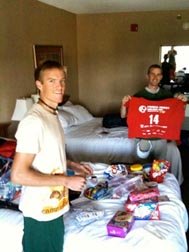
Since there is a light at the end of the tunnel for extreme sports athletes (the win!) it is well worth the discipline! There is one time when I do eat junk food. You'll notice in th picture our team is ordering up allot of junk food. Though it was not the best choice, in expedition races we sometimes resort to some junk food. It sometimes brings comfort and a little boost that can keep you going. Would apples and veggies be better? Sure! But it would not bring us the same level of comfort we needed to press on. In this picture we still had 5 days to go! RECOVERY: ATHLETE DIET MENU Athlete Diet Menu
Eating within two hours is crucial to recover the muscles and restore glycogen. Eating within the first 30 minutes is even better. To fully do this, you need to to eat protein and carbohydrates in the correct balance. You should have a 3:1 carb to protein meal. The ideal meal would be 30-60 grams of high quality complex carbohydrates and 10-30 grams of protein, preferably whey isolate. Supplements, proper diet, active recovery and rest can rebuild your body much stronger than when you began. Massage, ice baths, and saunas other great ways to recover. Recovery though is where you see the gain. You tear your body down during training and racing, and to come back stronger you must let it recover. SPORTS BARS Athlete Diet Menu
You need to make sure it is nutritious, preferably organic and that is fits within your calorie intake for the day. Bars can be used for a nutrition snack, or even fuel for those long workout day. I do not use these during a workout, unless I was doing something such as a long slow bike ride or hike. I find them to hard to digest for regular workouts at anything higher than a recovery pace. Although there are a wide range of Sports Nutrition Bars to choose from, most of them are junk. There are only a few bars such as Clif Bar and Hammer Bar that have been successfully fulfilling the needs of every athlete, myself included! SPORTS NUTRITION ARTICLESReferencesBill D. Misner Ph.D. C.S.M.T., product developer and researcher for Hammer Nutrition. |
Sign up for our Extreme Adventure FREE Sports-ZineExtreme Adventure Sports Zine
|
|
 |
Subscribe To This Site


The link to your selling page can go here
Powered by Site
Build It! |
Copyright©2008 www.extreme-adventure-sports.com